


-
Table of Contents
“Revolutionize your production process with our new carbon fiber sheet lamination – 40% faster, 100% efficient.”
Introduction
Introducing the new carbon fiber sheet lamination process that has revolutionized the production time by 40%. This innovative technique has significantly reduced the time and effort required for lamination, making it a game-changer in the manufacturing industry. Let’s explore how this process works and the benefits it brings to the production process.
Benefits of Using Carbon Fiber Sheet Lamination in Manufacturing
Carbon fiber has been revolutionizing the manufacturing industry with its lightweight and high-strength properties. However, the traditional process of manufacturing carbon fiber sheets has been time-consuming and costly. This has limited its use in various industries, such as aerospace, automotive, and sports equipment. But now, a new carbon fiber sheet lamination process has emerged, promising to cut production time by 40%. This breakthrough has opened up a whole new world of possibilities for manufacturers, and here are some of the benefits of using carbon fiber sheet lamination in manufacturing.
First and foremost, the new lamination process significantly reduces production time. The traditional method of manufacturing carbon fiber sheets involves laying individual carbon fibers in a mold, which is then infused with resin and cured in an autoclave. This process can take up to several hours, depending on the size and complexity of the sheet. However, with the new lamination process, multiple layers of carbon fiber sheets can be stacked and infused with resin simultaneously. This not only saves time but also reduces the number of steps involved in the production process, making it more efficient and cost-effective.
Moreover, the new lamination process allows for greater design flexibility. In the traditional method, the carbon fibers are laid in a specific direction, which limits the design possibilities. On the other hand, with lamination, the carbon fibers can be stacked in different orientations, creating a more complex and customizable design. This is especially beneficial for industries like aerospace, where every gram of weight matters, and the design needs to be aerodynamic. With lamination, manufacturers can create lightweight and intricate designs that were not possible before.
Another advantage of using carbon fiber sheet lamination is the improved strength and durability of the final product. The stacking of multiple layers of carbon fiber sheets creates a stronger and more resilient structure. This is because the fibers are evenly distributed, providing better load-bearing capabilities. Additionally, the lamination process allows for the use of different types of carbon fibers, such as unidirectional, woven, or braided, which can further enhance the strength and durability of the final product. This makes carbon fiber sheets laminated using this new process ideal for applications that require high strength and durability, such as in the automotive and sports equipment industries.
Furthermore, the new lamination process also reduces material waste. In the traditional method, excess carbon fibers are often trimmed off, resulting in a significant amount of waste. However, with lamination, the carbon fibers are stacked and cut to the desired shape before being infused with resin. This reduces the amount of waste generated, making the production process more environmentally friendly. Additionally, the use of multiple layers of carbon fiber sheets also reduces the chances of defects, resulting in a higher yield of usable products.
Lastly, the new lamination process also offers cost savings for manufacturers. As mentioned earlier, the reduction in production time and material waste results in cost savings. Moreover, the use of multiple layers of carbon fiber sheets also eliminates the need for additional reinforcement materials, such as aluminum or steel, which can be expensive. This makes carbon fiber sheet lamination a more cost-effective option for manufacturers, especially in industries where weight and cost are crucial factors.
In conclusion, the new carbon fiber sheet lamination process has brought about significant benefits for manufacturers. From reducing production time and material waste to offering greater design flexibility and cost savings, this breakthrough has opened up a whole new world of possibilities for the use of carbon fiber in various industries. With its lightweight, high-strength, and durable properties, carbon fiber sheet lamination is undoubtedly a game-changer in the manufacturing industry.
How the New Lamination Process Reduces Production Time
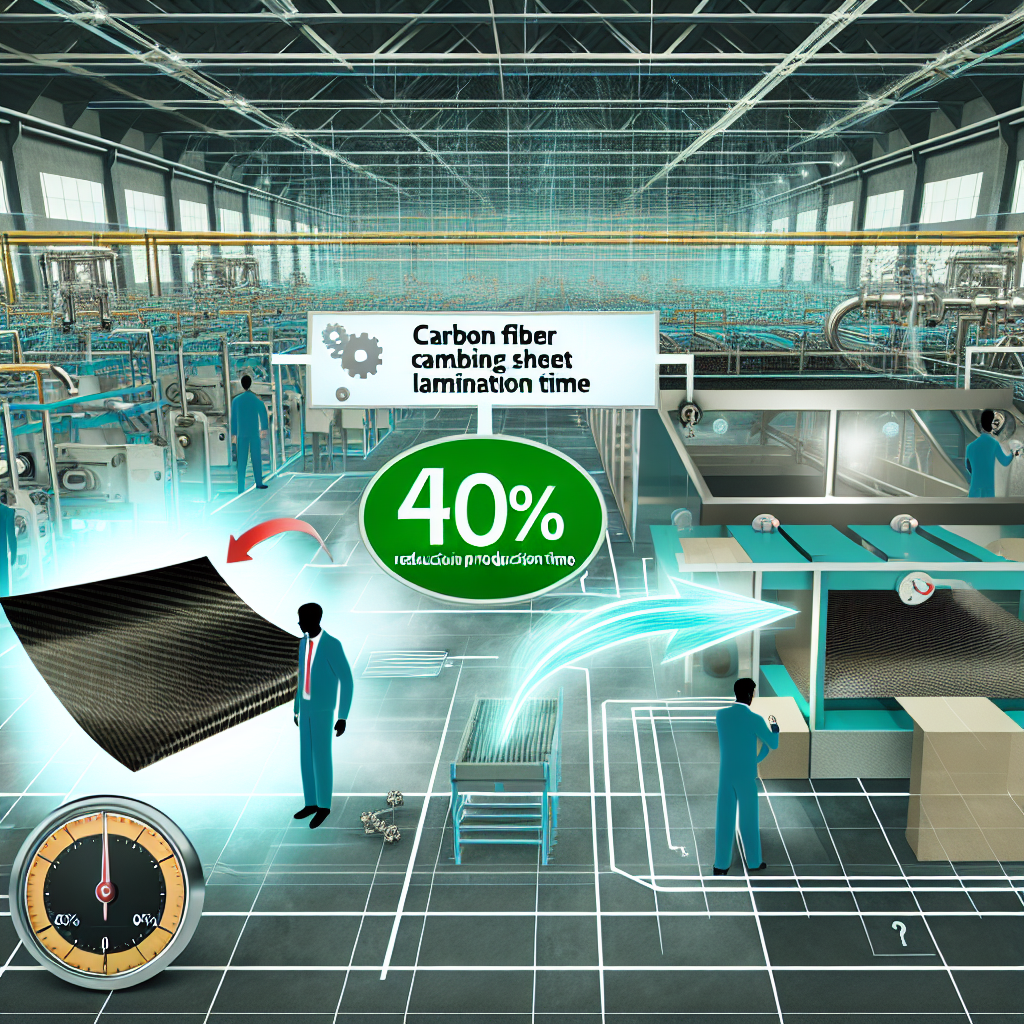
Carbon fiber has long been hailed as a revolutionary material in various industries, from aerospace to automotive. Its lightweight yet strong properties make it a highly sought-after material for high-performance applications. However, the traditional process of laminating carbon fiber sheets has been known to be time-consuming and labor-intensive. This has been a major hindrance in the widespread use of carbon fiber in mass production. But now, a new lamination process has been developed that promises to cut production time by a staggering 40%.
The traditional process of laminating carbon fiber sheets involves manually laying each layer of carbon fiber fabric onto a mold, applying resin, and then curing it in an autoclave. This process is not only time-consuming but also requires skilled labor and expensive equipment. The new lamination process, on the other hand, utilizes a pre-impregnated carbon fiber sheet, also known as prepreg, which is already infused with resin. This eliminates the need for manual resin application and curing, significantly reducing production time.
One of the key advantages of the new lamination process is its ability to be automated. The prepreg sheets can be cut and placed onto the mold using robotic arms, reducing the need for manual labor. This not only speeds up the process but also ensures consistency and accuracy in the placement of the carbon fiber sheets. Additionally, the use of prepreg sheets eliminates the need for a separate resin mixing and application process, further streamlining the production process.
Another factor that contributes to the reduction in production time is the elimination of the autoclave curing process. Autoclaves are large, expensive machines that are used to cure the resin and bond the carbon fiber layers together. The new lamination process utilizes a different curing method, such as vacuum bagging or oven curing, which is not only faster but also more cost-effective. This makes the production process more accessible to smaller manufacturers who may not have the resources to invest in an autoclave.
Apart from the time and cost savings, the new lamination process also offers improved quality control. With the traditional process, there is a higher risk of human error in the manual application of resin and placement of carbon fiber sheets. This can result in inconsistencies and defects in the final product. The use of prepreg sheets and automation in the new process minimizes the risk of human error, ensuring a more consistent and high-quality end product.
The reduction in production time also has a significant impact on the overall cost of carbon fiber products. The traditional lamination process is not only time-consuming but also labor-intensive, making it a costly process. The new lamination process, with its automation and elimination of the autoclave, reduces labor costs and speeds up production, resulting in a more cost-effective process. This, in turn, makes carbon fiber products more accessible and affordable to a wider market.
In conclusion, the new carbon fiber sheet lamination process is a game-changer in the production of carbon fiber products. Its ability to reduce production time by 40% through automation, elimination of the autoclave, and use of prepreg sheets makes it a highly efficient and cost-effective process. This not only benefits manufacturers but also makes carbon fiber products more accessible and affordable to consumers. With this new process, the future of carbon fiber looks brighter than ever.
Potential Applications for Carbon Fiber Sheet Lamination in Various Industries
Carbon fiber has long been known for its strength, durability, and lightweight properties, making it a popular material in various industries such as aerospace, automotive, and sports equipment. However, the traditional process of manufacturing carbon fiber sheets has been time-consuming and costly, hindering its widespread use in other industries. But with the development of a new carbon fiber sheet lamination process, production time has been reduced by 40%, opening up a world of potential applications for this versatile material.
One industry that can greatly benefit from this new lamination process is the automotive industry. Carbon fiber sheets have been used in high-end sports cars for their lightweight and strong properties, but the high production costs have limited its use in mass-produced vehicles. With the new lamination process, the production time and costs are significantly reduced, making it a more viable option for use in mainstream cars. This can lead to lighter and more fuel-efficient vehicles, contributing to the global effort towards sustainability.
In the aerospace industry, weight is a critical factor in aircraft design. The use of carbon fiber sheets in aircraft components can significantly reduce the overall weight of the aircraft, resulting in improved fuel efficiency and reduced emissions. However, the traditional process of manufacturing carbon fiber sheets has been a barrier to its widespread use in the industry. With the new lamination process, the production time is cut down, making it a more feasible option for use in aircraft manufacturing. This can lead to more efficient and environmentally friendly air travel.
Another industry that can benefit from this new lamination process is the construction industry. Carbon fiber sheets have been used in the construction of bridges and buildings for their strength and durability. However, the high production costs have limited its use to only large-scale projects. With the new lamination process, smaller construction projects can also incorporate carbon fiber sheets, resulting in stronger and more resilient structures. This can also lead to cost savings in the long run, as carbon fiber is known for its longevity and low maintenance requirements.
The sports equipment industry is another area where the new lamination process can have a significant impact. Carbon fiber has been used in the production of high-performance sports equipment such as tennis rackets, golf clubs, and bicycles. However, the traditional manufacturing process has made these products expensive and inaccessible to the general public. With the reduced production time and costs, carbon fiber sports equipment can become more affordable, allowing more people to experience the benefits of this material in their athletic pursuits.
The medical industry is also a potential beneficiary of this new lamination process. Carbon fiber has been used in the production of medical devices such as prosthetics and implants due to its biocompatibility and strength. However, the high production costs have limited its use to only a few specialized applications. With the new lamination process, the production time and costs are significantly reduced, making it a more viable option for use in a wider range of medical devices. This can lead to improved patient outcomes and a more cost-effective healthcare system.
In conclusion, the new carbon fiber sheet lamination process has the potential to revolutionize various industries by making this versatile material more accessible and cost-effective. From automotive to aerospace, construction to sports equipment, and even in the medical field, the applications for carbon fiber sheets are endless. With the reduced production time and costs, we can expect to see more innovative uses of this material in the near future, leading to a more sustainable and efficient world.
Q&A
Q: What is the new carbon fiber sheet lamination process?
A: The new carbon fiber sheet lamination process is a manufacturing technique that involves bonding layers of carbon fiber sheets together to create a strong and lightweight material.
Q: How does this process cut production time by 40%?
A: This process utilizes a new adhesive technology that allows for faster curing times, reducing the overall production time by 40% compared to traditional lamination methods.
Q: What are the benefits of using carbon fiber sheets in manufacturing?
A: Carbon fiber sheets offer a high strength-to-weight ratio, making them ideal for use in industries such as aerospace, automotive, and sports equipment. They are also corrosion-resistant and have excellent thermal and electrical conductivity.