


-
Table of Contents
“Lightweight and strong, paving the way for sustainable living on Mars with NASA’s ultra-thin carbon fiber fabric.”
Introduction
NASA is constantly pushing the boundaries of space exploration and technology. In their latest endeavor, they are testing ultra-thin carbon fiber fabric for potential use in Mars habitat designs. This innovative material has the potential to revolutionize the way we build structures on other planets, making long-term human habitation on Mars a more feasible possibility. Let’s take a closer look at this exciting development from NASA.
Benefits of Using Ultra-Thin Carbon Fiber Fabric in Mars Habitat Designs
NASA has been at the forefront of space exploration for decades, constantly pushing the boundaries of what is possible. As we look towards the future and the possibility of human colonization on Mars, NASA is once again leading the way with innovative technology. One such technology is the use of ultra-thin carbon fiber fabric in Mars habitat designs. This cutting-edge material has the potential to revolutionize the way we build habitats on the red planet, offering numerous benefits that could make Mars colonization a reality.
One of the main benefits of using ultra-thin carbon fiber fabric in Mars habitat designs is its strength and durability. This material is incredibly strong, with a tensile strength five times that of steel. This means that it can withstand the harsh conditions on Mars, including extreme temperatures, high levels of radiation, and strong winds. This strength is crucial for the success of any habitat on Mars, as it needs to be able to withstand the harsh environment and protect its inhabitants.
In addition to its strength, ultra-thin carbon fiber fabric is also incredibly lightweight. This is a crucial factor when it comes to space travel, as every pound of material that is sent to Mars comes at a high cost. By using lightweight materials, NASA can reduce the weight of the habitat and other structures, making it more feasible to transport them to Mars. This also means that less fuel is needed for the journey, making it more cost-effective and environmentally friendly.
Another benefit of using ultra-thin carbon fiber fabric in Mars habitat designs is its flexibility. This material can be molded into various shapes and sizes, making it ideal for creating different types of habitats. It can also be easily transported in a compact form and then expanded on-site, reducing the amount of space needed for transportation. This flexibility allows for more efficient use of space and resources on Mars, making it easier to build and maintain habitats for future colonists.
One of the most significant challenges of building habitats on Mars is the lack of resources. The red planet has a thin atmosphere and no readily available water or building materials. This is where ultra-thin carbon fiber fabric comes in. This material can be made from carbon dioxide, which is abundant in the Martian atmosphere. This means that it can be produced on-site, reducing the need to transport large amounts of material from Earth. This not only saves time and money but also makes the habitat more self-sufficient and sustainable.
Moreover, ultra-thin carbon fiber fabric has excellent thermal properties, making it ideal for use in Mars habitats. It has a low thermal conductivity, meaning it can insulate against extreme temperatures. This is crucial on Mars, where temperatures can range from -225°F to 70°F. By using this material, NASA can create habitats that can maintain a comfortable temperature for its inhabitants, reducing the need for additional heating or cooling systems.
Finally, the use of ultra-thin carbon fiber fabric in Mars habitat designs can also have a positive impact on the environment. As mentioned earlier, this material can be made from carbon dioxide, which is a greenhouse gas responsible for climate change. By using this gas to create the fabric, NASA can help reduce its impact on the environment and potentially even reverse some of the damage caused by carbon emissions.
In conclusion, the benefits of using ultra-thin carbon fiber fabric in Mars habitat designs are numerous. Its strength, lightweight, flexibility, and thermal properties make it an ideal material for building habitats on the red planet. Its ability to be produced on-site and its potential positive impact on the environment make it a game-changer for future Mars colonization efforts. With NASA’s ongoing research and testing, we may soon see this innovative material being used to create sustainable and habitable structures on Mars.
Challenges and Solutions for Implementing Carbon Fiber Fabric in Space Habitats
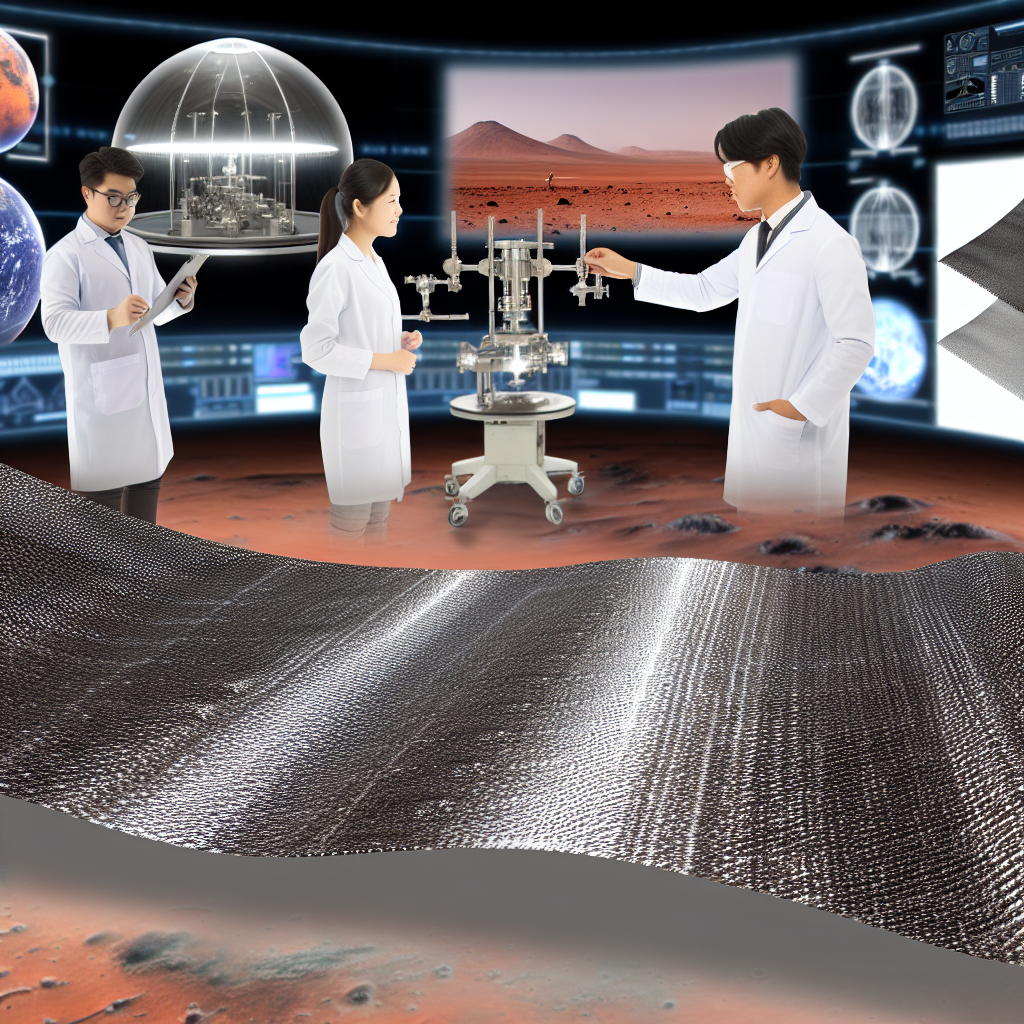
NASA has always been at the forefront of innovation and technology, constantly pushing the boundaries of what is possible. In their latest endeavor, they have turned their attention to the development of ultra-thin carbon fiber fabric for potential use in Mars habitat designs. This cutting-edge material has the potential to revolutionize the way we think about space habitats, but it also comes with its own set of challenges and solutions that must be addressed.
One of the main challenges in implementing carbon fiber fabric in space habitats is its durability and strength. While carbon fiber is known for its high strength-to-weight ratio, it is also known to be brittle and prone to damage from impacts. This is a major concern in space, where debris and micrometeoroids are constantly bombarding the surface of any structure. To address this issue, NASA has been conducting extensive testing on the fabric to ensure its durability and resistance to impacts.
Another challenge is the potential for off-gassing. Carbon fiber is made up of carbon atoms bonded together in a specific pattern, and when exposed to high temperatures, it can release gases such as carbon monoxide and carbon dioxide. In a confined space like a space habitat, this could pose a serious health risk to astronauts. To combat this, NASA has been working on developing a special coating for the fabric that would prevent off-gassing and make it safe for human habitation.
In addition to these challenges, there is also the issue of radiation protection. Space is filled with high levels of radiation, which can be harmful to humans. Traditional building materials, such as aluminum, provide some protection from this radiation, but carbon fiber fabric is not as effective in this regard. To address this, NASA has been exploring the use of a special radiation-resistant coating for the fabric, as well as incorporating additional layers of shielding materials into the habitat design.
One of the most exciting solutions to these challenges is the use of 3D printing technology. NASA has been experimenting with 3D printing carbon fiber structures, which allows for the creation of complex and intricate designs that would not be possible with traditional manufacturing methods. This not only increases the strength and durability of the fabric, but it also allows for the integration of other materials, such as radiation shielding, into the structure.
Another solution is the use of inflatable habitats. These structures are made up of a flexible material that can be inflated to create a livable space. Carbon fiber fabric is an ideal material for this type of habitat, as it is lightweight and can be easily transported to space. NASA has already successfully tested inflatable habitats on the International Space Station, and they are now looking into incorporating carbon fiber fabric into these structures for future missions.
Despite these challenges, the potential benefits of using carbon fiber fabric in space habitats are immense. Its lightweight nature would significantly reduce the cost of transporting materials to space, and its strength and durability would make it a reliable and long-lasting building material. Additionally, the flexibility of the fabric allows for more efficient use of space, as it can be molded into various shapes and sizes to fit the needs of the mission.
In conclusion, while there are certainly challenges to be overcome in implementing carbon fiber fabric in space habitats, NASA is making great strides in finding solutions to these issues. With ongoing testing and research, it is only a matter of time before this innovative material becomes a staple in space habitat designs. The potential for carbon fiber fabric to revolutionize the way we think about living in space is truly exciting, and we can’t wait to see what the future holds for this incredible material.
Future Applications of Carbon Fiber Fabric in Space Exploration and Colonization
Carbon fiber fabric has been making waves in the world of space exploration and colonization. With its lightweight yet strong properties, it has become a popular material for various applications in the aerospace industry. Recently, NASA has taken this material to the next level by testing ultra-thin carbon fiber fabric for potential use in Mars habitat designs.
The idea of colonizing Mars has been a topic of fascination for scientists and space enthusiasts for decades. However, the harsh conditions on the red planet make it a challenging task. One of the biggest obstacles is the lack of resources and materials available on Mars. This is where carbon fiber fabric comes in.
NASA has been exploring the use of carbon fiber fabric for space applications since the 1970s. Its high strength-to-weight ratio and resistance to extreme temperatures make it an ideal material for spacecraft and other equipment. But now, NASA is taking it a step further by testing ultra-thin carbon fiber fabric for potential use in Mars habitats.
The concept behind this idea is to use inflatable structures made of ultra-thin carbon fiber fabric as habitats on Mars. These structures would be lightweight and compact for transportation to Mars, but once inflated, they would provide a spacious living and working area for astronauts. This would significantly reduce the cost and complexity of building habitats on Mars.
NASA has been conducting tests on this ultra-thin carbon fiber fabric at the Langley Research Center in Virginia. The fabric is made up of multiple layers of carbon fibers, each thinner than a human hair. These layers are then infused with resin and cured to create a strong and durable material. The result is a fabric that is only 0.25 millimeters thick but can support the weight of a person.
One of the main challenges in using this fabric for Mars habitats is its ability to withstand the harsh conditions on the planet. Mars has a thin atmosphere, which means that the fabric would be exposed to high levels of radiation and extreme temperature fluctuations. To address this, NASA has been subjecting the fabric to various tests, including exposure to ultraviolet radiation and extreme temperatures.
The results of these tests have been promising. The ultra-thin carbon fiber fabric has shown to be highly resistant to radiation and can withstand temperatures ranging from -200 to 200 degrees Celsius. This makes it a viable option for use in Mars habitats, where it would provide protection for astronauts from the harsh environment.
In addition to its use in habitats, carbon fiber fabric also has potential applications in other aspects of space exploration and colonization. One such application is in the construction of spacecraft. The lightweight nature of carbon fiber fabric would significantly reduce the weight of spacecraft, making them more fuel-efficient and cost-effective to launch into space.
Furthermore, carbon fiber fabric could also be used in the construction of space suits for astronauts. These suits need to be lightweight and flexible to allow for ease of movement in space. Carbon fiber fabric can provide the necessary strength and flexibility while also protecting astronauts from radiation and extreme temperatures.
In conclusion, the use of ultra-thin carbon fiber fabric in Mars habitat designs is a significant development in the field of space exploration and colonization. Its lightweight, strong, and durable properties make it an ideal material for use in the harsh conditions on Mars. With ongoing research and testing, we can expect to see more innovative applications of carbon fiber fabric in the future of space exploration.
Q&A
1) What is NASA testing ultra-thin carbon fiber fabric for?
NASA is testing ultra-thin carbon fiber fabric for potential use in Mars habitat designs.
2) Why is NASA interested in using carbon fiber fabric for Mars habitats?
Carbon fiber fabric is lightweight, strong, and durable, making it a promising material for constructing habitats on Mars where traditional building materials may not be readily available.
3) How does NASA plan to use the ultra-thin carbon fiber fabric in Mars habitat designs?
NASA envisions using the ultra-thin carbon fiber fabric as a structural material for inflatable habitats, providing a lightweight and compact solution for transporting and constructing habitats on Mars.